
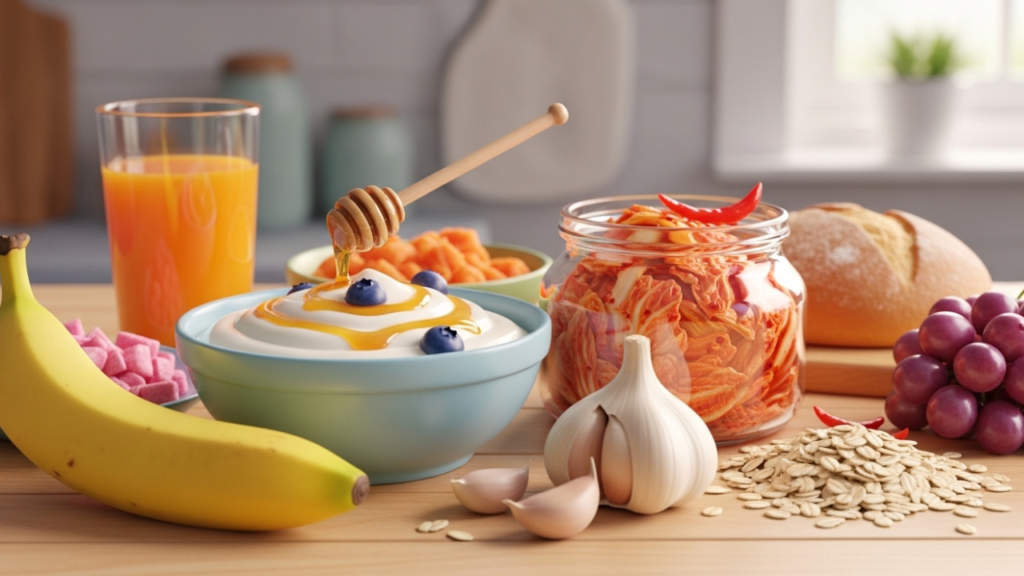
If you have spent any time in a health food store lately, you have seen these words on practically every product label: probiotic, prebiotic, postbiotic. They sound almost identical, and if you have ever stood in the supplement aisle genuinely confused about which one you are supposed to be buying, you are not alone.
Here is the thing though. They are not interchangeable. Not even close. Each one does something completely different inside your gut, and understanding how they work together will completely change how you think about eating for digestive health. The even better news? You probably do not need to buy any supplements at all.
Why All Three Matter: The Garden Analogy
Before jumping into definitions, here is the most useful way to understand how these three work together. Think of your gut like a garden:
- Prebiotics are the soil and fertilizer, the nutrients that make growth possible
- Probiotics are the seeds, the living organisms you introduce into the garden
- Postbiotics are the harvest, the beneficial things produced once everything is growing well
Remove any one of them and the garden starts to struggle. Feed all three consistently and it genuinely thrives. That is your gut in a single analogy.
What Are Probiotics?
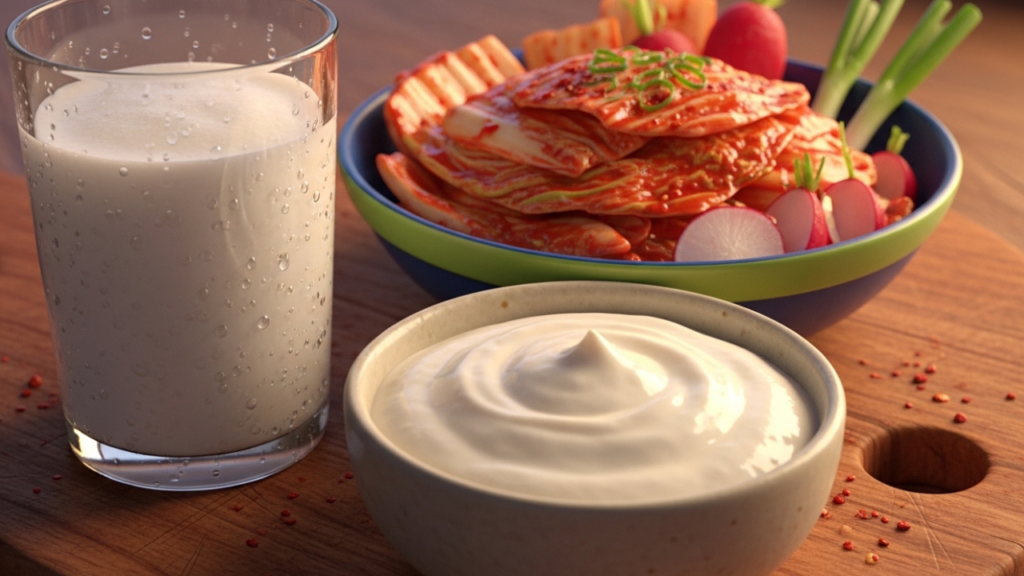
Probiotics are living microorganisms, mostly bacteria and sometimes yeast, that deliver real health benefits when you consume enough of them. These are the beneficial bacteria that take up residence in your gut and actively work on your behalf.
Research shows probiotics help keep your gut bacteria balanced, crowd out harmful strains, support immune function, and even influence mood through the gut-brain connection. Different strains do different things. Some target digestion, others immunity, and some specifically help reduce anxiety by supporting the production of calming brain chemicals.
One important point from Stanford Lifestyle Medicine: experts consistently recommend getting probiotics from whole fermented foods rather than supplements, because food-based sources deliver a wider variety of bacterial strains along with nutrients your gut can use right away.
Best Food Sources of Probiotics
- Yogurt: Must say “live and active cultures.” Yogurts that have been heat-treated after fermentation contain no live bacteria at all.
- Kefir: A fermented milk drink that can contain up to 61 different bacterial and yeast strains, far more variety than yogurt.
- Kimchi: Naturally fermented Korean cabbage that also delivers prebiotic garlic and ginger alongside live bacteria.
- Sauerkraut: Buy it raw and refrigerated only. Pasteurized shelf-stable versions contain no live cultures.
- Kombucha: Fermented tea with live cultures. Watch the added sugar content on commercial brands.
- Miso and Tempeh: Traditional fermented soy foods rich in beneficial bacteria and other gut-healthy compounds.
What Are Prebiotics?
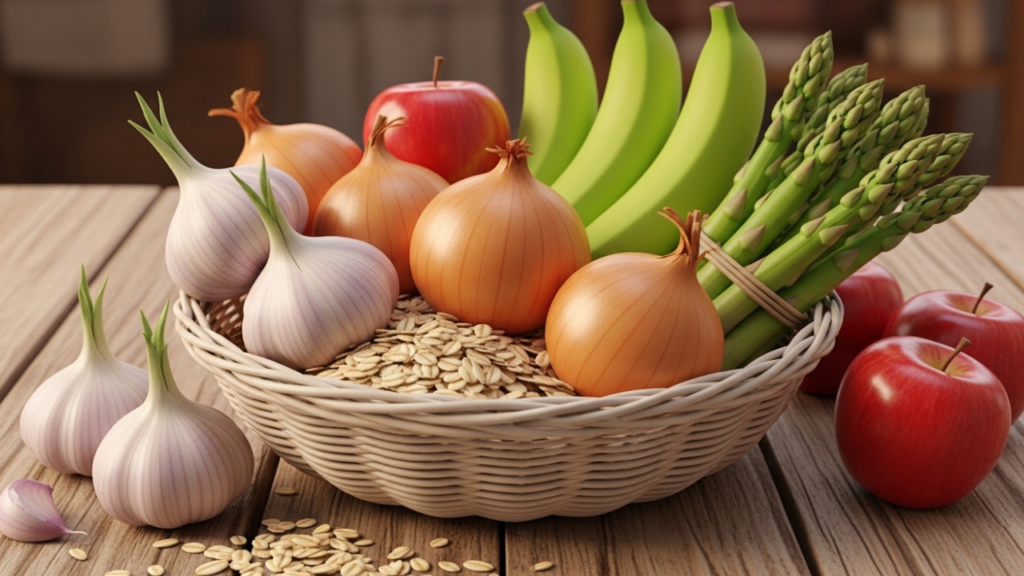
If probiotics are the living organisms in your gut, prebiotics are what you feed them to keep them alive and working. Prebiotics are plant fibers and compounds that your body cannot break down on its own, but your gut bacteria can.
In practical terms: you eat the fiber, it reaches your lower digestive tract undigested, and your gut bacteria ferment it for fuel. Beyond just feeding bacteria, regular prebiotic consumption is linked to better mineral absorption, improved immune defense, healthier weight, and the production of the protective gut compounds we will talk about next.
Best Food Sources of Prebiotics
- Garlic and onions: High in plant fibers that are among the most well-studied prebiotic foods available.
- Leeks and asparagus: Excellent prebiotic sources that pair well with almost any savory dish.
- Oats: Contain a specific fiber that selectively stimulates the growth of beneficial gut bacteria.
- Green bananas: Packed with resistant starch, a powerful prebiotic that ripe bananas actually lose as they sweeten.
- Jerusalem artichokes: Among the highest prebiotic fiber concentrations of any food. Introduce them slowly if your gut is not used to them.
- Apples: Contain pectin, a prebiotic fiber, plus plant compounds that feed beneficial bacteria independently.
- Lentils and chickpeas: Fiber-rich and highly effective at fueling a diverse gut community at every meal.
What Are Postbiotics?
Postbiotics are the newest and arguably most exciting member of this trio, and they are the ones you almost never hear about despite arguably being the most impactful of the three. They are the beneficial compounds produced when your probiotic bacteria ferment prebiotic fiber. Essentially, they are the beneficial byproduct of your gut doing its job well.
Postbiotics include protective compounds, enzymes, vitamins, and metabolites that strengthen the gut lining, regulate immune responses, and reduce inflammation throughout the body, with effects that reach far beyond digestion into heart and brain health.
The most studied postbiotic is butyrate, a compound that directly protects the gut lining, manages the immune system, and has anti-inflammatory effects on the brain. Postbiotics also carry an excellent safety profile because they do not need to be alive to work, making them particularly beneficial for people with weaker immune systems.
How to Get More Postbiotics Naturally
You cannot eat postbiotics directly the way you eat probiotics. They are generated inside you. But you can maximize your body’s natural production by:
- Eating plenty of prebiotic fiber at every meal so your gut bacteria have raw material to ferment
- Consuming fermented foods regularly, which naturally contain some postbiotic compounds already formed during fermentation
- Avoiding excess sugar and highly processed food, which disrupt the bacterial activity that generates postbiotics in the first place
Do You Really Need All Three?
Short answer: yes, and they work best together. Research confirms that probiotics, prebiotics, and postbiotics each play a distinct role. Probiotics without prebiotics do not have enough fuel to survive and produce beneficial compounds. Prebiotics without a healthy probiotic population have nothing to properly ferment them. And postbiotics are only generated in meaningful amounts when both of the others are well-supplied.
The simplest and most sustainable approach is building a varied, whole-food diet that includes all three naturally, fermented foods for probiotics, fiber-rich plants for prebiotics, and by doing both consistently, your body handles the postbiotics on its own.
A Simple Daily Checklist
Getting all three into your day does not need to be complicated:
Breakfast: Oats topped with sliced green banana and a spoonful of yogurt. Prebiotics and probiotics in one bowl.
Lunch: Lentil and leek soup with a side of kimchi. Fiber-rich prebiotics paired with live probiotic cultures.
Dinner: A stir-fry with tempeh, garlic, onion, and asparagus over brown rice. Probiotics and prebiotics working together.
That combination naturally produces protective gut compounds throughout the day. No supplement required.
Frequently Asked Questions (FAQs)
None of them is more important than the others. They operate as a system. Think of it like a campfire: probiotics are the wood, prebiotics are the oxygen, and postbiotics are the warmth produced. You need all three for the fire to burn well.
For most healthy people, yes. Stanford Lifestyle Medicine consistently recommends whole food sources over supplements, citing broader gut bacteria variety and additional nutrients as key advantages of a food-first approach.
It depends. Some strains have strong clinical evidence for specific conditions like IBS or antibiotic-associated digestive issues. But for general gut health in someone already eating a varied diet, fermented whole foods typically deliver more benefit than a standard over-the-counter probiotic capsule.
Most people notice digestive changes within one to two weeks of consistent intake. More significant changes in gut bacteria composition and their effects on mood, energy, and immunity typically take four to eight weeks of regular improvement.
According to MDPI research, postbiotics support gut lining integrity, regulate immune responses, reduce body-wide inflammation, and have measurable benefits for colon health, weight management, and brain health. Butyrate specifically is linked to protection against colon cancer and neurological disease.
The Bottom Line
Prebiotics feed your gut bacteria. Probiotics are your gut bacteria. Postbiotics are what your gut bacteria produce when they are thriving. None of them is more important than the others and they work as a team. A diet built around fermented foods, fiber-rich vegetables, legumes, and whole grains covers all three naturally. Start with one new addition this week and build from there.