
The word antioxidant gets used constantly in health marketing, usually plastered across smoothie bottles and supplement labels without much explanation. Most people have a vague sense that antioxidants are good for you without knowing what they actually do or why they matter.
Here is the straightforward version. Your body runs on a process called metabolism, the constant chemical work of turning food into energy, repairing tissue, fighting infection, and keeping every organ functioning. That process, along with everyday environmental exposures such as pollution, cigarette smoke, and even sunlight, produces unstable molecules called free radicals as byproducts.
Antioxidants are compounds that neutralize free radicals before they can cause damage. They are essentially your body’s internal cleanup crew. Some antioxidants are made by your body. Others come from food. Both matter, and the ones from food are harder to replace if your diet falls short.
What antioxidants actually are
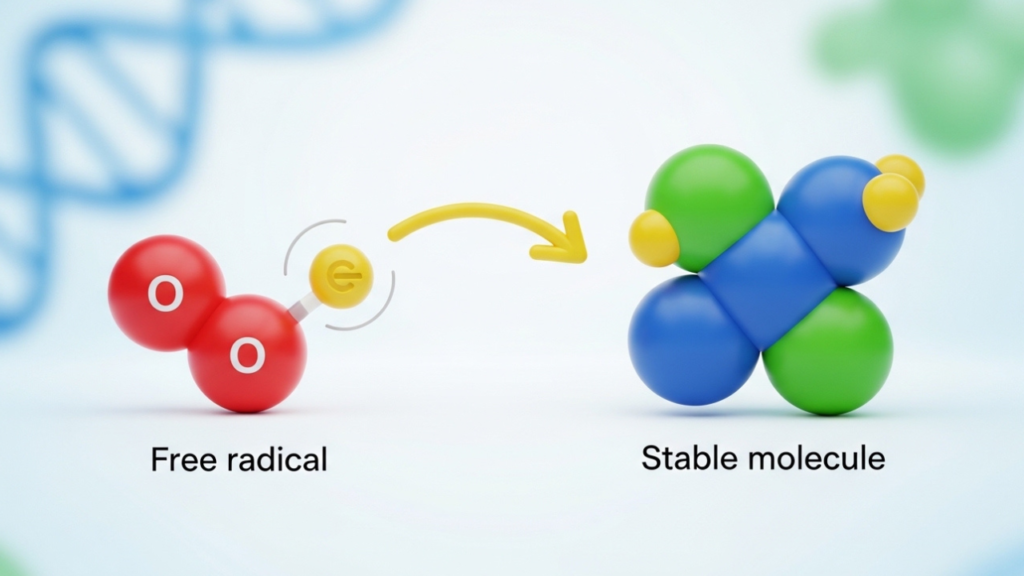
A free radical is a molecule missing an electron. Because electrons need to travel in pairs, a molecule missing one will aggressively steal an electron from the nearest stable molecule to stabilize itself. That turns the stable molecule into a new free radical, which then steals from another, setting off a chain reaction of cellular damage.
Your body produces free radicals naturally through normal processes like breathing, digesting food, and fighting infection. That is completely normal and unavoidable. The problem starts when free radical production outpaces your body’s ability to neutralize them.
Antioxidants work by donating an electron to a free radical without becoming unstable themselves. That stops the chain reaction. The free radical is neutralized before it can damage a healthy cell.
What free radicals are and where they come from
External sources that accelerate free radical production include air pollution, cigarette smoke, alcohol, ultraviolet radiation from sunlight, industrial chemicals, and highly processed foods. Even intense exercise temporarily spikes free radical levels, though regular moderate exercise ultimately strengthens your antioxidant defenses over time.
When free radicals consistently outnumber your antioxidant defenses, a state called oxidative stress develops. This is not a sudden event. It is a slow, ongoing process of cellular damage that accumulates over years and is now understood to be a central driver of heart disease, type 2 diabetes, certain cancers, Alzheimer’s disease, Parkinson’s disease, and accelerated aging at the cellular level.
What happens when free radicals get out of control
When oxidative stress becomes chronic, the damage it causes concentrates in certain vulnerable systems.
Your blood vessels take a direct hit because free radicals oxidize LDL cholesterol, making it significantly more likely to embed in artery walls and start the process that leads to plaque buildup. Your DNA strands get damaged in ways that can trigger mutations linked to cancer development. Brain cells are particularly vulnerable because the brain uses an enormous proportion of the body’s oxygen, which is why oxidative stress is a central feature of Alzheimer’s and Parkinson’s disease research. Your skin shows the effects as collagen and elastin break down, the primary mechanisms behind premature aging.
It also affects how you feel day to day. Chronic oxidative stress is associated with fatigue, brain fog, and slow recovery from illness and injury.
How antioxidants stop the damage
Different antioxidants work in different parts of the body and protect different types of cells. Some are fat-soluble, meaning they protect the fatty membranes surrounding cells. Others are water-soluble and work inside cells or in the bloodstream. That is why eating a wide variety of antioxidant-rich foods consistently outperforms focusing on any single antioxidant or supplement.
Your body also produces its own antioxidant enzymes. Glutathione, sometimes called the master antioxidant, is produced inside your cells and is among the most powerful antioxidants. But glutathione production declines with age, poor diet, chronic stress, and illness, which is why dietary antioxidants become increasingly important as you get older.
The main types of antioxidants and what each one does
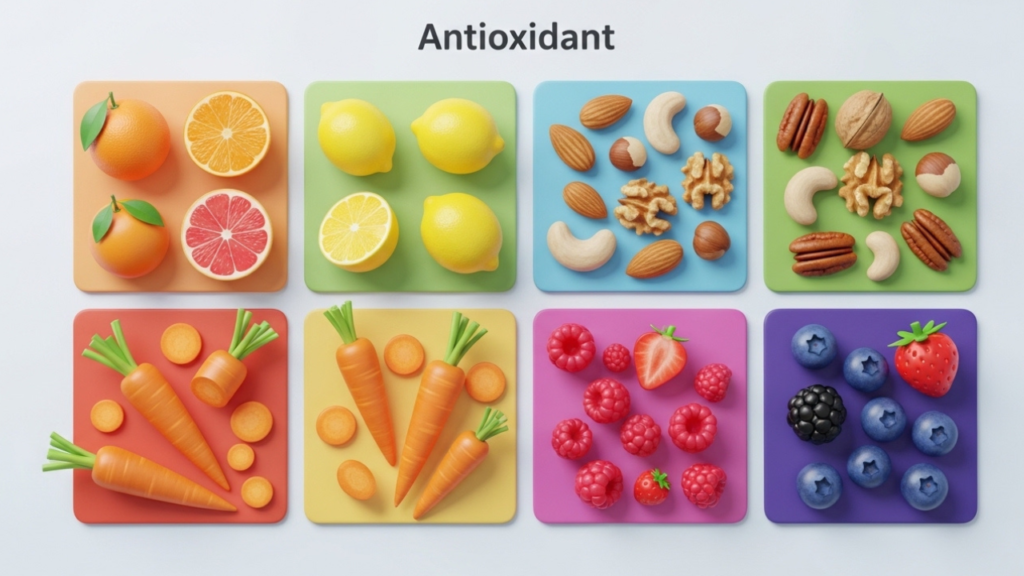
Vitamin C is water-soluble and works in the bloodstream and inside cells. It supports immune function and collagen production, and it can regenerate Vitamin E after it has been used up. Found in citrus fruits, bell peppers, kiwi, and strawberries.
Vitamin E is fat-soluble and protects cell membranes. Found in nuts, seeds, sunflower oil, and avocado.
Beta-carotene is a precursor to Vitamin A. It supports eye health, skin, and immune function. Found in carrots, sweet potatoes, butternut squash, and leafy greens.
Selenium is a mineral that supports your body’s own antioxidant enzyme systems. Found in Brazil nuts, fish, eggs, and whole grains. One Brazil nut per day covers your full daily selenium requirement.
Flavonoids are a large family of plant compounds with strong antioxidant and anti-inflammatory effects. Found in berries, apples, onions, green tea, dark chocolate, and red wine.
Lycopene has particularly strong evidence for protecting against heart disease and certain cancers. Found in tomatoes, watermelon, and pink grapefruit. Cooking tomatoes significantly increases lycopene availability.
Polyphenols cover thousands of plant compounds, including flavonoids, resveratrol, and curcumin. Found in virtually every whole plant food, with the highest concentrations in berries, herbs, spices, tea, and extra virgin olive oil.
The best food sources
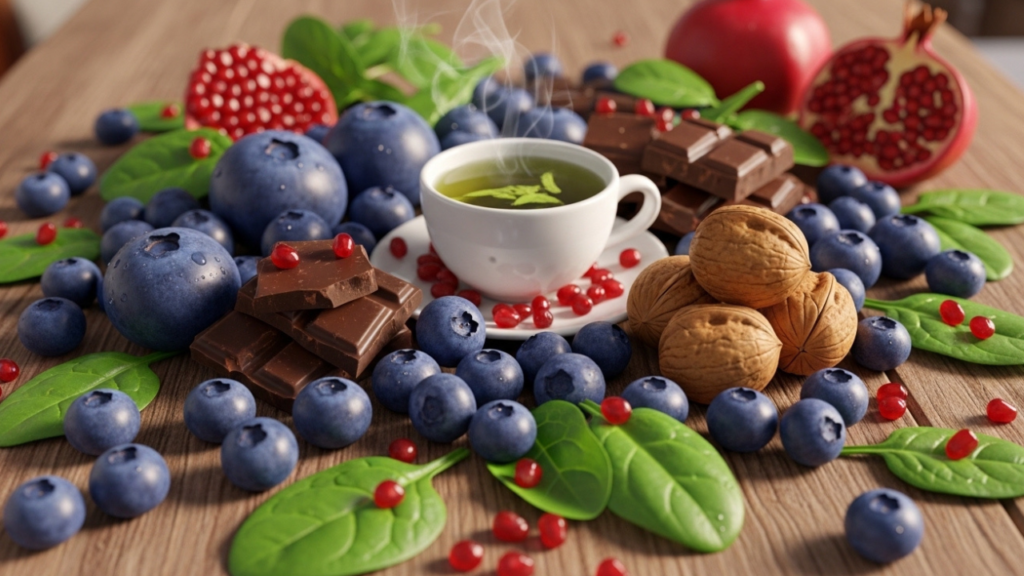
According to research published in Nutrition Journal, the foods consistently highest in antioxidant content include blueberries and dark berries, dark leafy greens, artichokes, red beans and kidney beans, pecans and walnuts, dark chocolate at 70% cacao or higher, green tea, extra virgin olive oil, and herbs and spices. Gram for gram, dried herbs and spices like cloves, cinnamon, oregano, and turmeric contain extraordinarily high antioxidant concentrations.
The pigments that create color in plants are often antioxidants themselves, which is why eating a wide variety of colors is the most practical shortcut to broader antioxidant coverage.
Can you get too many antioxidants?
From whole food sources, it is very difficult to overconsume antioxidants. High-dose antioxidant supplements are a different story. Several large studies have found that isolated high-dose beta-carotene supplements increased lung cancer risk in smokers. The current scientific consensus is that getting antioxidants from food is consistently beneficial, while megadose supplementation carries risks that food sources do not.
Simple daily habits to boost your intake
You do not need to overhaul your diet to meaningfully increase your antioxidant intake. Add a handful of berries to your breakfast. Swap regular cooking oil for extra virgin olive oil. Drink one or two cups of green tea daily. Add fresh herbs to meals freely. Include a legume in at least one meal each day. Eat one square of dark chocolate after dinner. Keep a mixed nut snack available as your default between-meal option.
None of these changes is dramatic. But done consistently, they can substantially increase your daily antioxidant intake over weeks and months.
Frequently Asked Questions (FAQs)
Some vitamins, like C and E, function as antioxidants. But antioxidants are a much broader category that includes thousands of plant compounds that are not classified as vitamins.
Yes, though not always in the way people assume. Boiling can reduce the water-soluble antioxidants, such as Vitamin C. But cooking actually increases the availability of some antioxidants, including lycopene in tomatoes and beta-carotene in carrots. Roasting, steaming, and sauteing tend to preserve more antioxidants than boiling.
Red wine contains resveratrol and other polyphenols, but the amounts are modest compared to those in grape juice, blueberries, or dark chocolate. The harms of alcohol mean it is not a recommended source for those who do not already drink.
Yes. Chronic psychological stress increases free radical production and reduces glutathione levels. This is one of the ways prolonged stress damages physical health over time.
The Bottom Line
You do not need to know chemistry to benefit from antioxidants. You just need to eat more colorful plants, more consistently. Berries at breakfast, vegetables at every meal, green tea instead of another soda, and dark chocolate instead of lighter confectionery. Do those things most days, and your antioxidant intake will look after itself.